انتشار مقالات دومین کنفرانس بین المللی کواترنری

پنجشنبه، 27 آبان، 1400
انتشار مقالات دومین کنفرانس بین المللی کواترنری
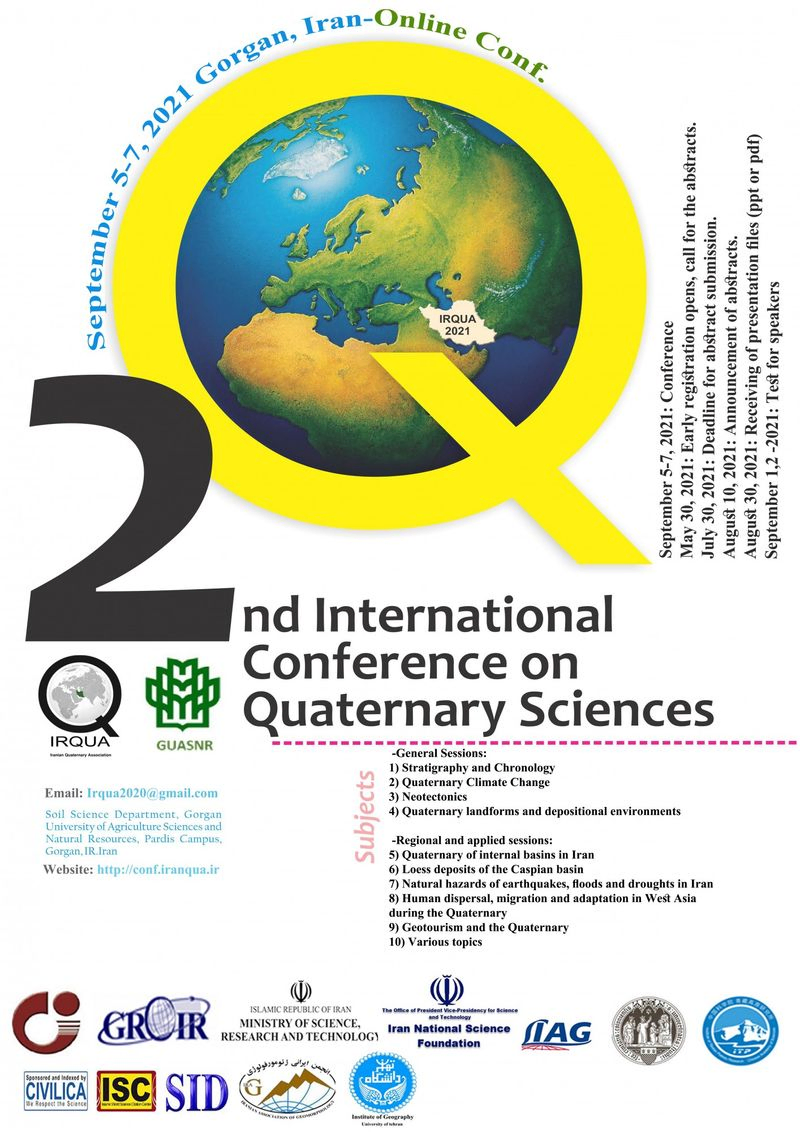
مقالات دومین کنفرانس بین المللی کواترنری در تاریخ 27 آبان 1400 در پایگاه سیویلیکا نمایه و منتشر شد.این رویداد توسط کواترنری ایران در شهر گرگان برگزار شده است.در این رویداد 65 مقاله شامل 116 صفحه ارائه شده است.بر اساس تحلیل اولیه انجام شده، مقالات این دوره از کنفرانس عمدتا در موضوعات زیر ارائه شده است:
  • - زمین شناسی
  • - جغرافیا، برنامه ریزی و توسعه
لیست و عناوین مقالات نمایه شده از دومین کنفرانس بین المللی کواترنری به صورت زیر می باشد:

1. Early Pleistocene climate in north Iran and its correlation with EasternAsia


2. Current status of Epipalaeolithic studies in South-Easter Caspian Sea


3. Toward the understanding of (post)pedogenic processes behind the peaks and lows of commonly used climate proxies


4. Active faulting, earthquakes, and geomorphology of the Main Kopeh Dagh fault, Turkmenistan


5. Active tectonics along the Khazar fault (Alborz, Iran)


6. Active tectonics of the Kalabagh Fault in Pakistan: implications from morphotectonics and luminescence dating


7. Age of the Khvalynian Strait in the Late Pleistocene History of the Manych Depression


8. Application of landform planation index (LPI) in identifying planation surfaces and paleotopography of Gorgan loess plateau (northeast of Iran)


9. Arctic Oscillation Modulates climate over Northeast Iran


10. Can Past Holocene climates and environments be used as analogs for predicting future environmental responses to global warming?


11. Changing the motion of Ladar fault during Quaternary, Khur area, Central Iran


12. Clay mineralogy of the sediments in Sabzevar playa, NE Iran; implication for the late quaternary climate changes


13. Climate change and its footprint on the geohazard amplification in Iran


14. New evidence of Late Pleistocene hominin occupations in the Southern Caspian Sea Corridor


15. high-resolution paleoclimate record from SE Iran reveals extreme sensitivity of West Asia to temperature changes since the Little Ice Age


16. Development of cryogenic processes as a factor in the loess formation in the Lower Volga valley


17. Environmental Changes in Lakes of Iran in Anthropocene epoch (Case study: Gavkhuni Swamp)


18. Evaluation of the applicability of four global grid precipitation datasets in Iran and analysis of Iran’s modern precipitation features


19. Forcing and feedback mechanisms of rainfall on centennial to millennial timescales


20. Geochemical indicators of source area and weathering intensity for the loess-paleosol sequence of Neka-Abelou, Northern Iran


21. Geohazard aspects of Quaternary faulting within Tehran Region, NNW of Iran


22. Holocene moisture variations in western arid central Asia inferred from loess records from NE Iran


23. How did Humans Adapt in the Eastern Farming-pastoral zone during the Medieval Warm Period?


24. Impact of Climate change and Caspian Sea level fall on decline of Gorgan Bay


25. Influence of the composition and properties of Khvalynsk deposits on the evolution of soils and soil cover in the north-western part of the Caspian Lowland (based on the results of mineralogical and micromorphological studies)


26. Landscape evolution in the northeastern Iranian Plateau reconstructed from Late Pleistocene to Holocene sediment archives – a project outline


27. Living on Quaternary Faults in Iran; High exposure problem in Earthquake Risk


28. Loess-paleosol sequence over ۲۳,۰۰۰ years ago in Gorgan


29. Lower Volga loess-paleosol sequences


30. Luminescence chronology of the great Khvalynian transgression from the Kosika section (Lower Volga)


31. Massive dust plumes over West Asia during North Atlantic cold events revealed by a dust record from southeastern Iran


32. Middle Pleistocene Cave of Qaleh Kurd: the oldest human occupation in IRAN


33. Mineralogical and geochemical characteristics of vesicular horizons of desert soils in the Rayen region-Kerman


34. Modern pedogenesis on loess along a climate gradient in Northern Iran


35. New data on the structure of the loess-soil series of Tajikistan


36. Palaeoenvironmental reconstructions in drylands – an example from the Binaloud Mountains in northeastern Iran


37. Paleoclimate and Palaeoenvironment of the Central Zagros


38. Paleoclimate implications from grain-size analysis of loess-paleosol sequences from the Carpathian Basin


39. Pedogenesis- a likely process to explain the magnetic properties of the Late Pleistocene loess-paleosol sequence at Chenarli, northeastern Iran


40. Pedogenetic response to climatic fluctuations within the last glacialinterglacial cycle in the Lower Volga basin


41. Pedostratigraphy of the Kuban loess-paleosol sequences


42. Persian Gulf Holocene sedimentary environment based on two cores in shallow part of Bandar Abbas and Bushehr


43. Quantitative estimates of Holocene glacier meltwater variations on the Western Tibetan Plateau


44. Quaternary geology, active tectonics and urban development of the Tehran city


45. The dating evidence for the earliest domesticated cattle and sheep/goats and pastoralism history in Gansu-Qinghai regions, NW China


46. Rock Magnetic Records of Baluchabad Loess-Paleosol Sequences, Northern Iran


47. Soil erosion and its trend in Iran by comparing several case studies


48. Soil Erosion Susceptibility Mapping Using GIS and AHP Case Study Kalat-e-Naderi, Northeast Iran


49. Southeast Caspian coast evolution during Holocene


50. Speleothems: a Quaternary archive of hydroclimate change in Iran


51. Stages of loess accumulation of the multilayer Kulbulak Palaeolithic site (Uzbekistan)


52. Stratigraphy and Moisture Changes revealed from Iranian Loess- Paleosol in the Western Arid Central Asia since the Last Interglacial


53. Structure and chronology of the Chocolate clays facies of the Lower Volga


54. Subsurface erosion by soil piping – significance and consequences


55. Taman loess-paleosol sequence: structure, age, genesis


56. The analysis of Meteorological Parameters Influencing dust Genesis over the Middle East


57. The diffusion of animal husbandry in Eurasia and its influence on Hexi Corridor, NW China


58. The effect of flood on soil degradation in Gorganrud River Basin


59. The Effects of the Southern Zagros Folded Zone on the Adaptive Strategies of the Late Pleistocene Human Occupations in Fars Province


60. The Holocene events in the Caspian Sea


61. Climate variability analysis for evolution effect over the Garmsar Alluvial fan, Based on field measurements


62. The Late Quaternary Environmental changes in Iran


63. The Paleolithic cave of Qaleh Kord (Qazvin, IRAN): geoarchaeological study by using micromorphology and physical-chemical analysis


64. The role of the aeolian factor in the formation of the landforms of the Lower Volga region


65. The spatial and possess analyses of piping and gully head erosions using unmanned aerial vehicles (UAV) images


اخبار مرتبط با کنفرانسها