Antibiofilm of Pumpkin Seed Extract against the Strains of Strong Biofilm Producers of Cariogenic Bacteria

سال انتشار: 1404
نوع سند: مقاله ژورنالی
زبان: انگلیسی
مشاهده: 137

فایل این مقاله در 13 صفحه با فرمت PDF قابل دریافت می باشد

استخراج به نرم افزارهای پژوهشی:

لینک ثابت به این مقاله:

شناسه ملی سند علمی:

JR_JMCH-8-2_003

تاریخ نمایه سازی: 15 اسفند 1403

چکیده مقاله:

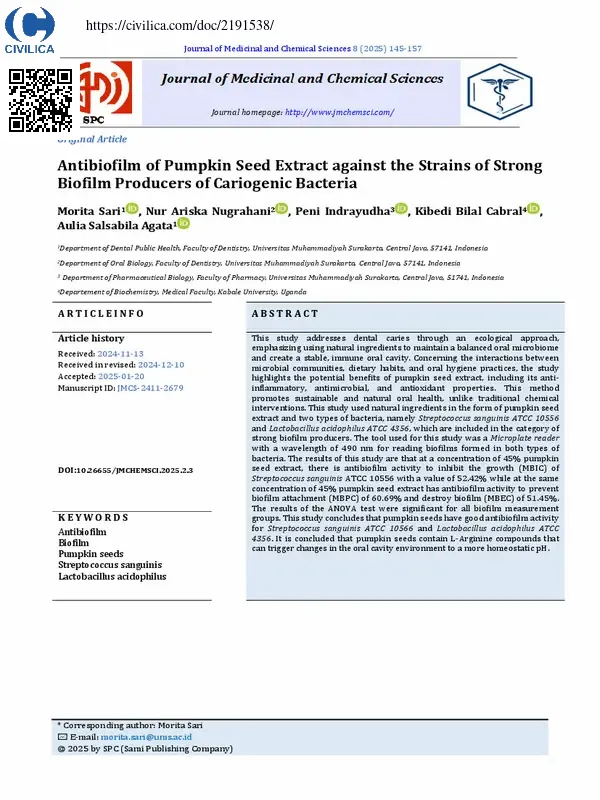
This study addresses dental caries through an ecological approach, emphasizing using natural ingredients to maintain a balanced oral microbiome and create a stable, immune oral cavity. Concerning the interactions between microbial communities, dietary habits, and oral hygiene practices, the study highlights the potential benefits of pumpkin seed extract, including its anti-inflammatory, antimicrobial, and antioxidant properties. This method promotes sustainable and natural oral health, unlike traditional chemical interventions. This study used natural ingredients in the form of pumpkin seed extract and two types of bacteria, namely Streptococcus sanguinis ATCC ۱۰۵۵۶ and Lactobacillus acidophilus ATCC ۴۳۵۶, which are included in the category of strong biofilm producers. The tool used for this study was a Microplate reader with a wavelength of ۴۹۰ nm for reading biofilms formed in both types of bacteria. The results of this study are that at a concentration of ۴۵% pumpkin seed extract, there is antibiofilm activity to inhibit the growth (MBIC) of Streptococcus sanguinis ATCC ۱۰۵۵۶ with a value of ۵۲.۴۲% while at the same concentration of ۴۵% pumpkin seed extract has antibiofilm activity to prevent biofilm attachment (MBPC) of ۶۰.۶۹% and destroy biofilm (MBEC) of ۵۱.۴۵%. The results of the ANOVA test were significant for all biofilm measurement groups. This study concludes that pumpkin seeds have good antibiofilm activity for Streptococcus sanguinis ATCC ۱۰۵۶۶ and Lactobacillus acidophilus ATCC ۴۳۵۶. It is concluded that pumpkin seeds contain L-Arginine compounds that can trigger changes in the oral cavity environment to a more homeostatic pH.

نویسندگان

Morita Sari

Department of Dental Public Health, Faculty of Dentistry, Universitas Muhammadiyah Surakarta, Central Java, ۵۷۱۴۱, Indonesia

Nur Ariska Nugrahani

Department of Oral Biology, Faculty of Dentistry, Universitas Muhammadiyah Surakarta, Central Java, ۵۷۱۴۱, Indonesia

Peni Indrayudha

Department of Pharmaceutical Biology, Faculty of Pharmacy, Universitas Muhammadiyah Surakarta, Central Java, ۵۱۷۴۱, Indonesia

Kibedi Bilal Cabral

Departement of Biochemistry, Medical Faculty, Kabale University, Uganda

Aulia Salsabila Agata

Department of Dental Public Health, Faculty of Dentistry, Universitas Muhammadiyah Surakarta, Central Java, ۵۷۱۴۱, Indonesia

مراجع و منابع این مقاله:
لیست زیر مراجع و منابع استفاده شده در این مقاله را نمایش می دهد. این مراجع به صورت کاملا ماشینی و بر اساس هوش مصنوعی استخراج شده اند و لذا ممکن است دارای اشکالاتی باشند که به مرور زمان دقت استخراج این محتوا افزایش می یابد. مراجعی که مقالات مربوط به آنها در سیویلیکا نمایه شده و پیدا شده اند، به خود مقاله لینک شده اند :
  • . Hasan F., Yuliana L.T., Budi H.S., Ramasamy R., Ambiya ...
  • . Wolff M.S., Schenkel A.B., The Anticaries efficacy of a ...
  • نمایش کامل مراجع